Flutes and Veggies
  • Home
  • About
  • Why vegan?
  • recipes
  • Contact
  • Resources

Flutes and Veggies

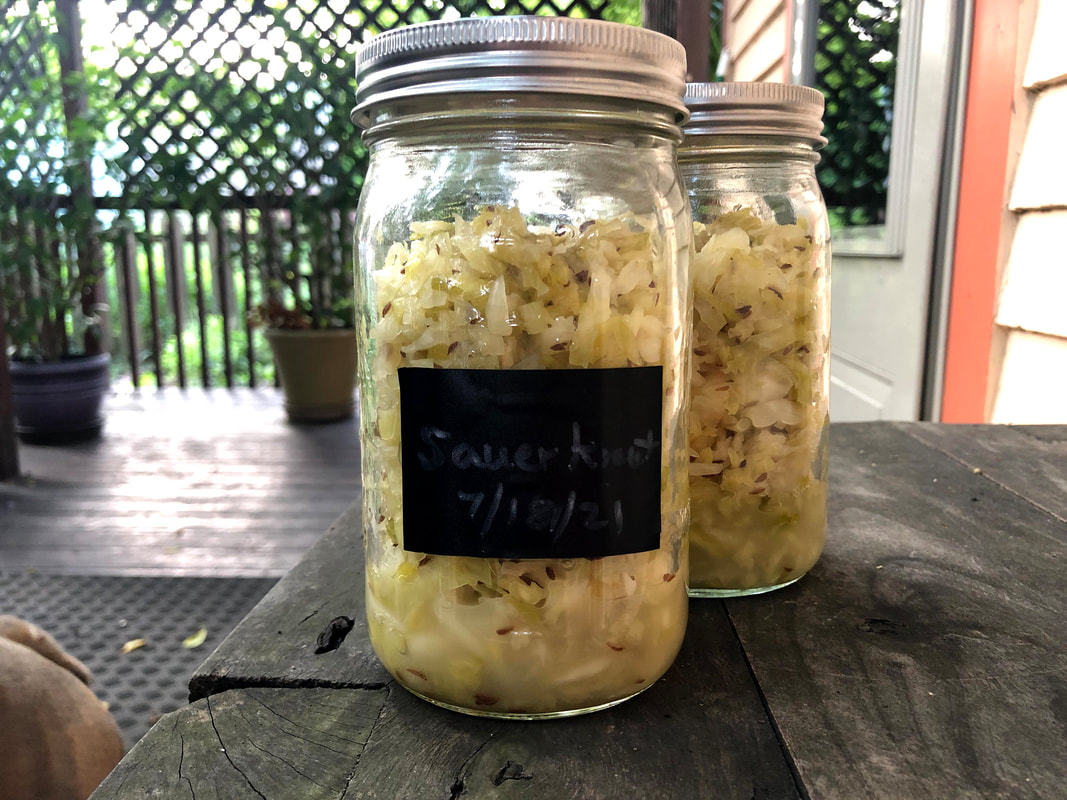
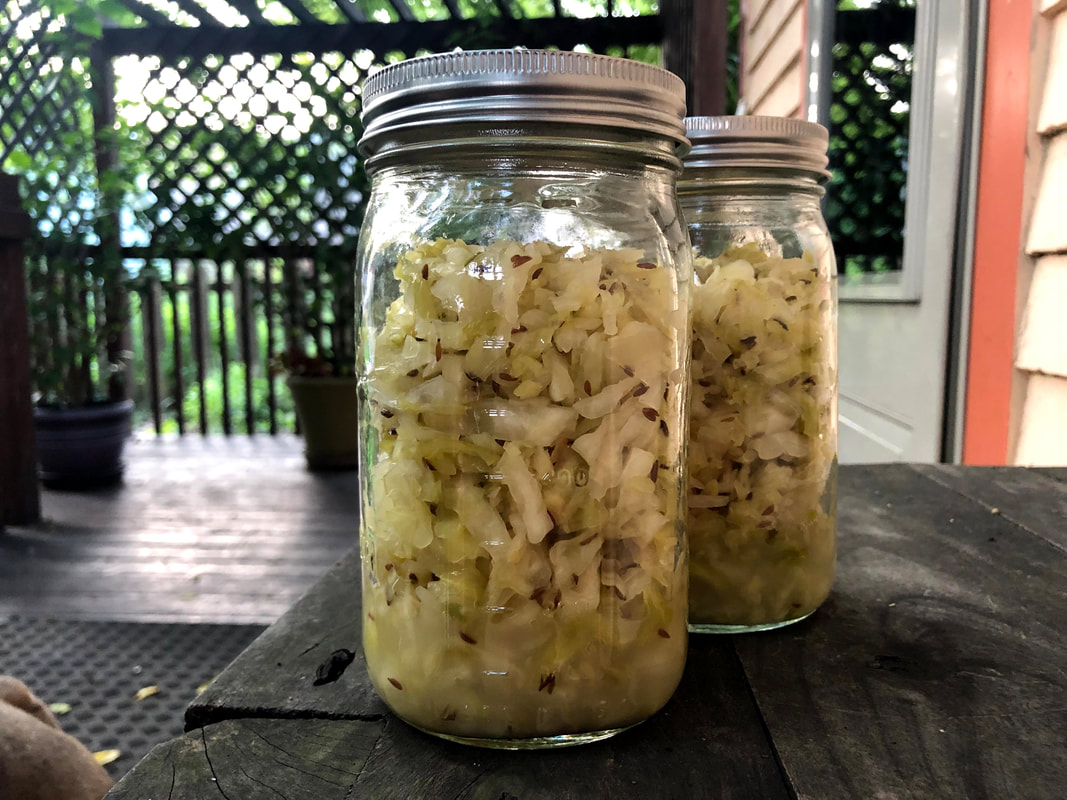
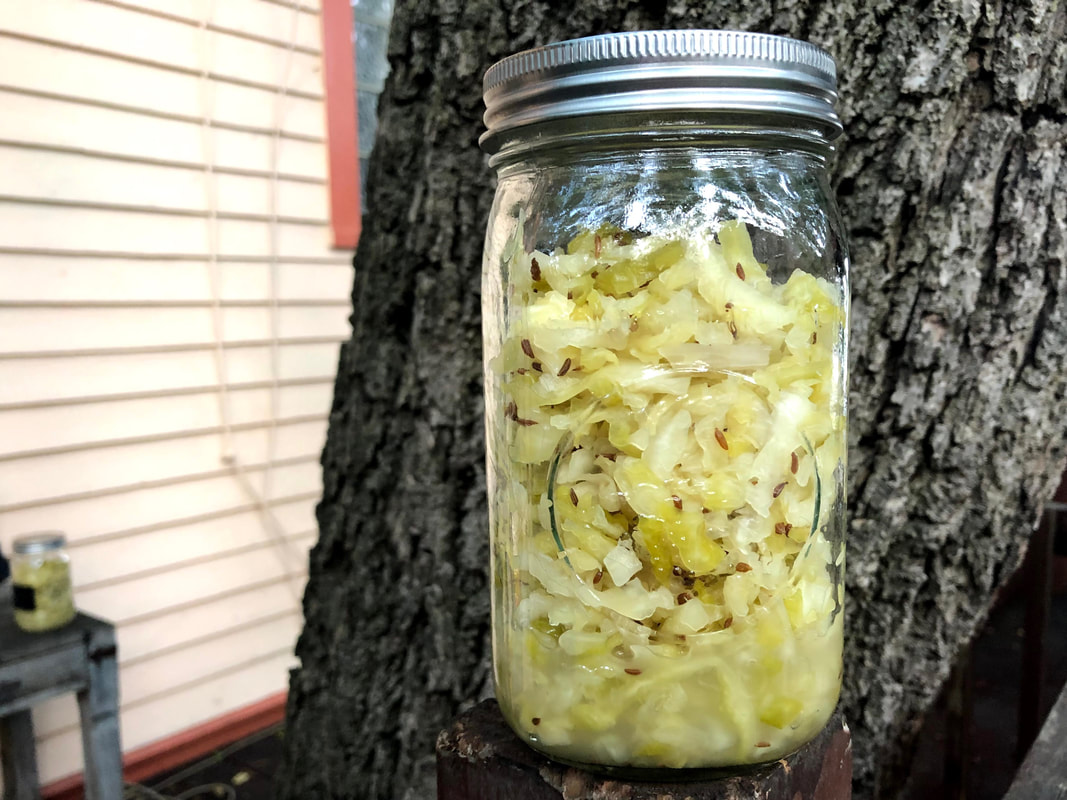
Sauerkraut

Vegan, gluten-free, grain-free, nut-free, soy-free, refined sugar-free

Yield: about 1 1/2 quarts (serves 8) / Prep time: 15 minutes / Total time: about 3-5 days

Adapted from a recipe on the Kitchn.

I have loved the tangy flavor of sauerkraut since I was a kid, and recently I've especially liked the fancy kinds you find in the refrigerated section of the grocery. These unpasteurized sauerkrauts insure that the beneficial probiotics remain in the fermented product. Those can be pretty pricey, though! Make your own at home for a fraction of the price and flavor it how you like it! Even though it may look like a lot of instructions, this recipe is actually quite easy. And massaging vegetables is fun! For other massaging veggies recipes, check out Lemony Kale Salad with Roasted Chickpeas and Garlic Croutons and Festive Kale Salad with Sweet Apple Cinnamon Vinaigrette & Pecan Parmesan. For other fermented foods, check out Soft Gruyere and any of the sourdough recipes. 
Picture
Picture
Ingredients:
  • 1 medium head green cabbage (about 3 pounds)*
  • 1 1/2 tablespoons kosher salt
  • ​1 tablespoon caraway seeds (optional, for flavor)

Equipment needed:
  • Cutting board
  • Chef's knife
  • Large mixing bowl
  • 2-quart wide-mouth canning jar (or 2 quart mason jars)
  • Canning funnel (optional)
  • Clean large cabbage leaf or silicone sealable container lid, optional
  • Smaller jelly jar that fits inside the larger mason jar
  • Clean stones, marbles, or other weights for weighing the jelly jar down
  • Cloth for covering the jar, such as cheesecloth or a tea towel
  • Rubber band or twine for securing the cloth
Directions:​
  1. Clean! Clean everything well and make sure your mason jar and jelly jar are washed and rinsed of all soap residue. 
  2. Prepare the cabbage. Discard the wilted, limp outer leaves of the cabbage. Cut the cabbage into quarters and trim out the core. Slice each quarter down its length, making 8 wedges. Slice each wedge crosswise into very thin ribbons.
  3. Massage the cabbage. Transfer the cabbage to a big bowl and sprinkle the salt over top. Begin working the salt into the cabbage by massaging and squeezing the cabbage with your hands. Gradually the cabbage will become watery and limp — more like coleslaw than raw cabbage. This will take 5 to 10 minutes. If you'd like to flavor your sauerkraut with caraway seeds, mix them in now.
  4. Pack the cabbage. Grab handfuls and carefully pack the cabbage into the jar.** Every so often, tamp down the cabbage in the jar with your fist. Pour any liquid that was released by the cabbage while you were massaging it into the jar. Optional: Place one of the larger outer leaves of the cabbage*** over the surface of the sliced cabbage. This will help keep the cabbage submerged in its liquid and help prevent mold growth. 
  5. Weigh the cabbage down. Once all the cabbage is packed into the mason jar, slip the smaller jelly jar into the mouth of the jar and weigh it down with clean stones or marbles. This will help keep the cabbage weighed down, and eventually, submerged beneath its liquid.
  6. Cover the jar. Cover the mouth of the mason jar with a cloth and secure it with a rubber band or twine. This allows air to flow in and out of the jar, but prevents dust or insects from getting into the jar.
  7. Press the cabbage every few hours. Over the next 24 hours, press down on the cabbage every so often with the jelly jar. As the cabbage releases its liquid, it will become more limp and compact and the liquid will rise over the top of the cabbage.
  8. Add extra liquid, if needed. If after 24 hours, the liquid has not risen above the cabbage, dissolve 1 teaspoon of salt in 1 cup of water and add enough to submerge the cabbage.
  9. Ferment the cabbage for 3 to 10 days. As it's fermenting, keep the sauerkraut away from direct sunlight and at a cool room temperature — ideally 65°F to 75°F. Check it daily and press it down if the cabbage is floating above the liquid.
    Because this is a small batch of sauerkraut, it will ferment more quickly than larger batches. Start tasting it after 3 days — when the sauerkraut tastes good to you, remove the weight, screw on the cap, and refrigerate. The flavor will continue to get stronger the longer it ferments at room temperature.
    While it's fermenting, you may see bubbles coming through the cabbage, foam on the top, or white scum. These are all signs of a healthy, happy fermentation process. The scum can be skimmed off the top either during fermentation or before refrigerating. If you see any mold, skim it off immediately and make sure your cabbage is fully submerged; don't eat moldy parts close to the surface, but the rest of the sauerkraut will be fine.
  10. Store sauerkraut for several months in the fridge. This sauerkraut is a fermented product so it will keep for at least two months in the refrigerator. As long as it still tastes and smells good to eat, it will be.****
*Red cabbage, Napa cabbage, and other cabbages all make great sauerkraut, and you can also mix and match for color and texture variation!
**If you have a canning funnel, this will make the job easier. 
***A clean silicone sealable container lid with a similar circumference to the jar also works well here. We're just looking to keep the cabbage evenly submerged in liquid. 
****You can transfer the finished sauerkraut to smaller glass containers, if desired. ​
Picture
Stay updated by following @FlutesAndVeggies on Facebook
© 2017-2025
  • Home
  • About
  • Why vegan?
  • recipes
  • Contact
  • Resources